RedRayne Exotics
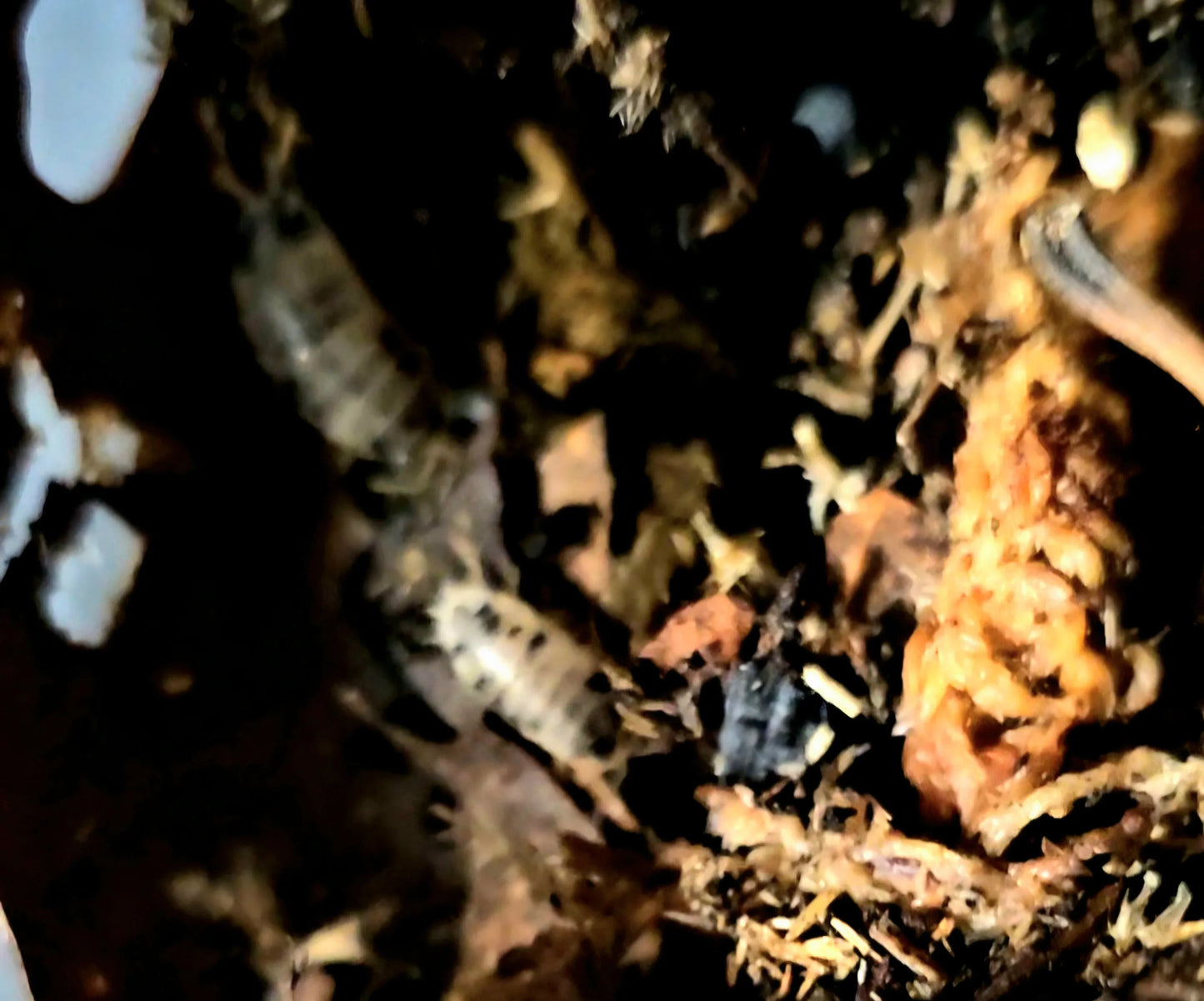
10 Count Porcellio Laevis Sp "Dairy Cow"
10 Count Porcellio Laevis Sp "Dairy Cow"
Couldn't load pickup availability
About Porcellio laevis "Dairy Cow" Isopods:
The "Dairy Cow" is a well-loved and highly effective morph of the common swift woodlouse, Porcellio laevis. They are cherished by keepers for their:
* Distinctive Appearance: Their bold, high-contrast black and white blotches truly resemble a miniature Holstein cow! Each individual has a unique pattern.
* Hardy & Resilient: Porcellio laevis are known for their incredibly robust nature, making them perfect for beginners and a reliable staple for experienced hobbyists. They tolerate a wide range of conditions.
* Voracious Appetites: These isopods are fantastic detritivores, quickly consuming decaying organic matter, uneaten food, and pet waste. They are often described as "garbage disposals" of the invertebrate world!
*They are not recommended for bioactive enclosures which house soft bodied sedentary reptiles as they are very protein hungry and can nibble on the reptile if not supplemented with protein.
* Extremely Prolific: "Dairy Cows" reproduce rapidly, establishing thriving colonies quickly, which is ideal for maintaining a healthy bioactive setup or for culturing as feeders for reptiles and amphibians.
* Active & Fun to Watch: They are quite active and large for an isopod, often seen foraging and exploring, providing an engaging element to your enclosure.
Care Recommendations:
* Temperature: Room temperature is perfectly suitable, ideally between 65-85°F (18-30°C). They are very forgiving.
* Humidity: Provide a moisture gradient, with one side of the enclosure consistently damp (e.g., with sphagnum moss or moist substrate) and the other side drier. Good ventilation is also important.
* Substrate: A deep substrate (at least 3-4 inches) composed of decaying hardwood, abundant leaf litter (oak, maple, etc.), and a calcium source (like cuttlebone, crushed eggshells, or limestone) is ideal.
* Hides: Offer plenty of bark flats, half-logs, and piles of leaf litter for them to hide under, climb on, and forage through.
* Feeding: While they will consume decaying organic matter, supplement their diet with a high-quality isopod chow, organic vegetables (e.g., carrots, squash, zucchini), and occasional protein sources (e.g., fish flakes, dried shrimp).
Shipping: We offer secure shipping options with a live arrival guarantee (please see our Shipping Policy for full details on our LAG). We prioritize the health and safety of our animals during transit.
Share